Cookie Stamps for Beginners: Everything You Need to Know
Learn how to use cookie stamps for beginners. Discover the basics, step-by-step techniques, and pro tips for clean, professional-looking stamped cookies.
What Are Cookie Stamps and Why Use Them?
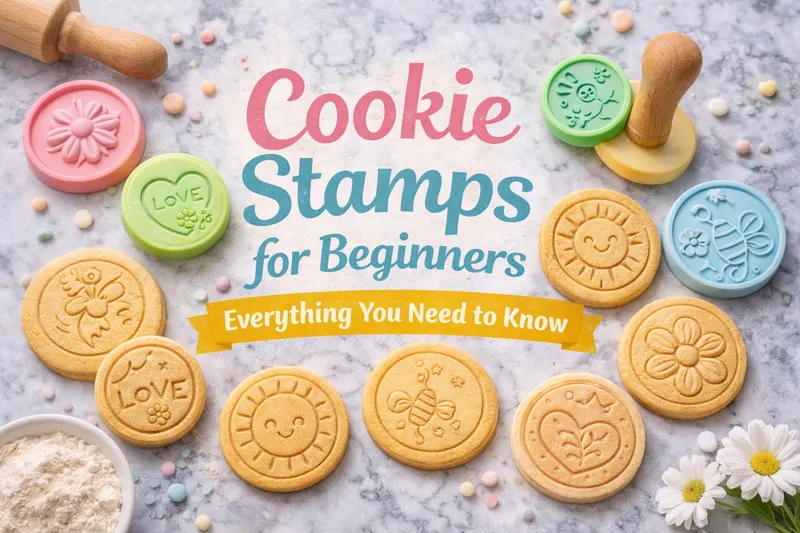
If you’ve never used a cookie stamp before, the concept is surprisingly simple: a stamp presses a design directly into dough, creating detailed impressions without any decorating skills. Unlike royal icing or piping (which take practice), stamps let you create professional-looking details in seconds — which makes them perfect if you’re new to cookie decorating.
Cookie stamps work on a basic principle: press, lift, and bake. The design appears in the dough itself, so the cookies look intentional and special even if it’s your first time.
How Cookie Stamps Work: The Basics
When you use a cookie stamp, you’re transferring pressure and pattern from the stamp to soft dough. The dough around the stamped area gets compressed, creating a visible impression. Standard outline stamps leave one consistent-depth mark. Multi-depth stamps (our specialty) have varied depths across the design, creating more detailed, dimensional-looking impressions — it’s like the difference between a simple pencil sketch and a detailed drawing.
Here’s what happens step by step:
- Press the stamp straight down into the dough using firm, even pressure
- Hold for a second (don’t wiggle — that smudges the lines)
- Lift straight up
- Release the stamp, and the pattern stays in the dough
- Bake as normal, and the design stays visible
The impression is permanent once it’s baked. It won’t fill in or disappear.
Choosing Your First Cookie Stamp
If you’re shopping for your first stamp, here’s what to consider:
Stamp Material: Most quality stamps are made from food-safe PLA plastic (like ours) or silicone. Both work great. PLA is durable and easy to press, while silicone is ultra-flexible.
Design Size: Start with something medium-sized (1.5 to 3 inches). Tiny stamps can be fiddly, while very large ones need a lot of pressure. A medium size gives you the best balance as you’re learning.
Single vs. Multi-Depth: If you’re just starting, either works. A simple single-depth stamp is easy to see and feel working. Multi-depth stamps create more visual interest but require the same technique.
Theme: Pick something you actually love looking at. You’ll be making a lot of these cookies, so choose a design that makes you happy.
The Right Dough Makes All the Difference
The dough you use matters more than you’d think. Soft dough doesn’t hold crisp impressions; dough that’s too hard is impossible to stamp.
The Goldilocks Zone: Your dough should be chilled (usually 1 to 1.5 hours after mixing) but not rock-hard. When you press your finger into it, you should leave a slight indent without crumbling. If the dough springs back immediately, it’s too warm. If it doesn’t budge, it’s too cold — let it sit at room temperature for 10–15 minutes.
Pro Tip: A well-formulated sugar cookie dough with the right ratio of butter and flour holds stamp details cleanly. If you’re new to baking, our best cookie dough recipe for stamps is designed specifically for this.
Thickness: Roll your dough to about ¼ to ⅜ inch thick. Thicker dough holds stamps better, while very thin dough can tear or show shallow impressions.
Step-by-Step: How to Stamp Your Cookies
Here’s exactly how to get clean, professional-looking impressions every time:
Prepare Your Workspace
- Dust your rolling surface and dough lightly with flour (just enough so it doesn’t stick to you)
- Have a small bowl of water nearby — you’ll see why
- Make sure your stamp is clean and dry
- Get your cut-out shapes ready or decide if you’re stamping before or after cutting (more on that below)
Press the Stamp
- Hold the stamp straight up (perpendicular to the dough) — no tilting
- Press down with steady, even pressure for about 1 second
- Don’t wiggle, rock, or twist — this smudges the design
- Press hard enough that you can see the stamp outline in the dough, but not so hard that you’re crushing the whole cookie
Lift Cleanly
- Lift the stamp straight up (same angle you pressed it)
- If the stamp sticks slightly, very gently wiggle it side-to-side just a tiny bit, then lift
- The impression should stay in the dough. If it disappears or looks shallow, your dough was too warm — pop it back in the fridge for a few minutes
Check Your Work
Look at the impression. You should see:
- Clear lines from the design
- Even depth across the stamp (for single-depth stamps)
- No smudging or rough edges
If the design looks blurry, you likely twisted the stamp. Next time, press straight and lift straight.
Stamp Before or After Cutting?
This is the question every beginner asks. Here’s the honest answer: both work, and you’ll figure out your preference through practice.
Stamp First, Then Cut: This is easier if you’re new because you see the design clearly before deciding where to place the cutter. You can see exactly what the stamp looks like in the dough and position your cutter to frame it nicely.
Cut First, Then Stamp: This saves dough scraps and looks neater. You’re only stamping pieces you’re definitely baking. The downside is you have to position the stamp carefully on a cookie that’s already been cut.
Our recommendation for beginners: stamp first. You have more room for the stamp, you can see what you’re doing better, and small mistakes are less noticeable.
Common Beginner Mistakes (and How to Fix Them)
Shallow or blurry impressions: Your dough is too warm. Pop it back in the fridge for 5–10 minutes and try again. Warm dough doesn’t hold crisp detail.
Stamp sticks to the dough and pulls it up: Your dough might be slightly too warm or too sticky. Dust with a tiny bit more flour and chill the dough. Also make sure your stamp is dry.
Wiggling or smudged lines: You’re moving the stamp while pressing. Practice pressing straight down and lifting straight up without any side-to-side motion.
Very faint impression: You’re not pressing hard enough, or your dough is too cold. Let cold dough sit out for 10–15 minutes, or press with more confidence next time.
Cookies spreading during baking, and the impression gets fuzzy: Your dough was too warm when you baked. Chill the stamped cookies on the baking sheet for 10–15 minutes before baking.
Decorating After Baking
Here’s the nice part: stamped cookies often look beautiful without any additional decorating. A clean stamp impression on a plain sugar cookie is finished. But if you want to add more:
- Royal icing in the impression: Flood the stamped area with thin icing for color
- Dusting with edible sparkle: A light dusting of sanding sugar or edible glitter on the warm cookie
- Chocolate dip: Dip the top half in melted chocolate, let it set, and the stamp design becomes a darker frame
Cookie Stamps from Cookie Cutter Cabin
If you’re ready to try stamps, our cookie stamps collection includes everything from simple outline stamps to detailed multi-depth designs. Each stamp is 3D-printed with food-safe PLA, so it’s durable and easy to press.
Our multi-depth stamps are the real differentiator — they create dimensional detail that makes your cookies look handcrafted, not stamped. If you want to level up from your first attempt, these are where the magic happens.
For specific event themes, browse our baby shower cookies, first birthday cookies, or holiday options — many include both cutters and stamps designed to work together.
You can also request a custom stamp if there’s a specific design or phrase you want to create.
Your First Stamped Cookies: What to Expect
The first batch might not be perfect, and that’s completely normal. You’re learning how much pressure to use, how cold your dough should be, and how to move your hands. By batch two or three, you’ll have the rhythm down.
Set a realistic goal: your first stamped cookies will have character. Some impressions might be deeper than others. A few might be slightly smudged. But they’ll also look intentional and special — which is the whole point.
Once you’ve made a few successful batches, you’ll feel confident enough to try different stamps, experiment with decorating, or even combine stamps and cutters for layered designs.
Next Steps
Start with one simple stamp design and one batch of well-chilled dough. Practice the press-and-lift motion 5–10 times. Pay attention to how the dough feels and responds. By your second batch, you’ll know exactly what you’re doing.
And if you make these cookies, we’d love to see them. Tag us — we genuinely enjoy seeing what our customers create.
Share this post:
Related Posts
The Best 2026 Cookie Decorating Trends With Cookie Cutters
Discover the cutest cookie cutter decorating trends for 2026, from minimalist designs to bold cookie stamp textures and everything in between.
The Best Go-To Sugar Cookie Dough Recipe For Cookie Cutters & Stamps
Discover our top-rated sugar cookie dough recipe perfect for cookie cutters and stamps. Get clean edges, crisp details, and soft cookies every time with step-by-step instructions.
Cookie Stamps vs. Cookie Cutters: What's the Difference (And Which Do You Need?)
Cookie stamps and cookie cutters serve different purposes. Learn the key differences, when to use each, and why a stamp-and-cutter combo gives you the best results.