Cookie Stamps vs. Cookie Cutters: What's the Difference (And Which Do You Need?)
Cookie stamps and cookie cutters serve different purposes. Learn the key differences, when to use each, and why a stamp-and-cutter combo gives you the best results.
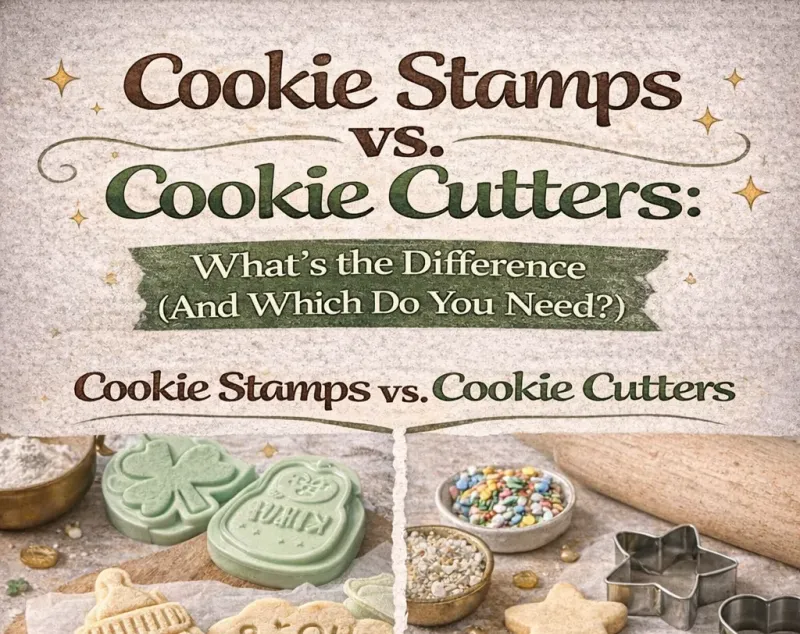
If you’ve ever browsed baking supplies online, you’ve probably noticed cookie stamps and cookie cutters sitting side by side and wondered whether you actually need both. Maybe you’ve been making cut-out cookies for years and you’re curious about stamps, or maybe you’re planning your first batch of baby shower cookies and want to know which tool will get you the best results.
Here’s the short version: cookie cutters and cookie stamps do completely different jobs. A cutter gives you the shape. A stamp gives you the detail. And when you combine them? That’s where the magic happens.
Let’s break it all down.
What Is a Cookie Cutter?
A cookie cutter is the tool most people picture when they think about decorated cookies. It’s an outline, a shaped piece of metal, plastic, or 3D-printed material that you press into rolled-out dough to cut a specific shape. Hearts, stars, shamrocks, baby onesies… the cutter creates the silhouette.
Cookie cutters are great at one thing: giving you a clean, consistent shape every single time. But that’s also where they stop. Once you lift the cutter away, you’re left with a blank canvas. Any detail, like facial features, lettering, or patterns, has to come from decorating afterward, usually with royal icing, which takes time, skill, and patience.
What cookie cutters do well:
- Create clean, consistent outlines in any shape
- Work with virtually any cookie dough recipe
- Reusable and easy to clean
- Available in thousands of designs
Where cookie cutters fall short:
- No surface detail or design, just the outline
- Decorated cookies require additional icing skills and drying time
- Every cookie beyond the basic shape needs hands-on decorating work
What Is a Cookie Stamp?
A cookie stamp presses a design into the surface of your dough, creating a raised or recessed pattern that bakes right into the cookie. Instead of just an outline, you get texture, detail, lettering, and imagery, all from a single press.
Stamps have actually been around for centuries. Traditional springerle molds from Germany and shortbread molds from Scotland were some of the earliest versions. Today, modern cookie stamps are typically made from food-safe plastic, silicone, wood, or metal, and the designs have gotten incredibly detailed thanks to advances in manufacturing, especially 3D printing.
The beauty of a stamped cookie is that it looks impressive the moment it comes out of the oven. No icing required (though you absolutely can ice them if you want). The stamped impression creates visual interest through light and shadow alone.
What cookie stamps do well:
- Add detailed designs, text, and patterns directly into the dough
- Create professional-looking cookies without any icing
- Perfect for events where you need large batches of decorated cookies fast
- The stamped design doubles as a guide if you do want to add icing later
Where cookie stamps fall short:
- A stamp alone doesn’t cut the dough into a shape. You still need a cutter for that (unless you’re making round cookies with a simple glass or round cutter)
- Requires slightly more technique. Dough temperature and thickness matter
- Basic single-depth stamps can produce flat, hard-to-read impressions
The Real Difference: Shape vs. Detail
Think of it this way:
A cookie cutter answers the question: What shape is this cookie?
A cookie stamp answers the question: What does this cookie look like?
A cutter gives you a baby-bottle-shaped cookie. A stamp turns that baby bottle into a baby bottle with measurement lines, a nipple cap, bubbles, and the word “baby” across the front, all baked right into the surface.
That’s why serious cookie makers don’t choose between stamps and cutters. They use both.
Why a Stamp-and-Cutter Combo Is the Best of Both Worlds
When a cookie stamp is paired with a matching cutter, you get the clean shape and the detailed design in a single workflow. Stamp first to impress the design, then cut around it for a perfect edge. (Some people prefer to cut first and then stamp. Either order works, and you’ll find your preference with practice. We cover both methods in our guide to using cookie cutters and stamps together.)
This combo approach is what we focus on at Cookie Cutter Cabin. Every one of our stamp and cutter sets includes both pieces: the stamp that creates the embossed design and the matching cutter for clean edges. No mixing and matching from different brands and hoping the sizes line up.
The Multi-Depth Advantage
Not all stamps are created equal. Most cookie stamps on the market press a single, uniform depth into the dough. The result can look flat and the details can be hard to read, especially after baking when the dough rises slightly and softens the impression.
Our multi-depth imprint technology takes a different approach. Instead of pressing everything to the same level, the stamp creates multiple levels of depth in a single press. Some elements are pressed deeper than others. Textured, stamped cookies are one of the biggest cookie decorating trends for 2026, and multi-depth technology is a big reason why. This gives you:
- Better contrast between design elements
- More readable text on lettering-heavy designs (like “Oh Baby” or “Lucky Vibes Only”)
- More visual depth that catches light and shadow beautifully
- Designs that survive baking because even as dough expands slightly in the oven, the multi-depth impression holds its detail
It’s the difference between a faint outline in the dough and a design that genuinely pops.
How to Get the Best Results with Cookie Stamps
Whether you’re using our stamps or any other brand, a few simple techniques will dramatically improve your results:
Start with chilled dough. This is the single most important tip. After rolling out your dough to about 1/4 to 1/2 inch thick, pop it in the fridge for 60-90 minutes before stamping. Cold dough holds the stamped impression much better than room-temperature dough. You’ll see a night-and-day difference.
Use a release agent. A light dusting of flour or powdered sugar on the stamp prevents sticking and ensures a clean release. Some bakers prefer a quick spritz of cooking spray. Experiment to find what works best with your recipe.
Press firmly and evenly. Don’t rock the stamp side to side. Press straight down with even pressure across the entire surface, hold for 2-3 seconds, then lift straight up. You want every part of the design to hit the dough at the same depth.
Use the right dough recipe. Not every sugar cookie recipe works well with stamps. You want a recipe that holds its shape and doesn’t spread much during baking. Recipes with a higher flour-to-butter ratio and no leavening (or very little baking powder) tend to work best. Avoid recipes that call for a lot of baking soda, which can cause the dough to puff and lose the stamped detail. Our go-to sugar cookie dough recipe was designed specifically for clean edges and crisp stamp details.
Don’t skip the cutter. If your stamp doesn’t have a built-in cutting edge, always use a matching cutter to trim the edges after stamping. This gives you that clean, professional shape that makes the whole cookie look polished.
When to Use What: A Quick Guide
| Scenario | Best Tool |
|---|---|
| You want shaped cookies to decorate with royal icing from scratch | Cookie cutter |
| You want impressive cookies with zero decorating time | Cookie stamp + cutter combo |
| You’re making a large batch for a party or event and need them to look great fast | Cookie stamp + cutter combo |
| You’re making simple shapes (circles, squares) and don’t need custom designs | Cookie cutter or just a glass |
| You want cookies with text, detailed characters, or themed designs baked in | Cookie stamp + cutter combo |
| You plan to ice your cookies but want a guide for where to pipe | Cookie stamp + cutter combo (the impression acts as your decorating roadmap) |
| You’re baking with kids and want something easy and fun | Either works, stamps are especially fun for kids since the results are instant |
What About Embossers and Debossers?
You might also see the terms “embosser” and “debosser” when shopping for cookie tools. Here’s the quick breakdown:
A debosser (or cookie stamp) presses into the dough, creating recessed lines. This is what most people mean when they say “cookie stamp.” The design sits below the surface of the cookie.
An embosser creates a raised design. The pattern sticks up above the surface of the cookie. These are less common for cookies and more often used with fondant.
Most cookie stamps, including ours, are debossers. The recessed design catches light beautifully, holds up well during baking, and is easier to ice over if you choose to add icing later.
Our Recommendation
If you’re just getting started with cookie decorating, or if you want to make event-worthy cookies without spending hours piping icing, a stamp-and-cutter combo set is the single best investment you can make. You’ll get professional-looking cookies in a fraction of the time, and you can always add icing later if you want to take them to the next level.
Browse our full collection of cookie stamp and cutter sets. We have themed collections for baby showers, bridal showers (see all designs), first birthdays, holidays, and more. Every set includes matching stamps and cutters designed to work together perfectly.
Have questions about which set is right for your next event? Reach out to us. We love helping bakers find exactly what they need.
Share this post:
Related Posts
The Best 2026 Cookie Decorating Trends With Cookie Cutters
Discover the cutest cookie cutter decorating trends for 2026, from minimalist designs to bold cookie stamp textures and everything in between.
The Best Go-To Sugar Cookie Dough Recipe For Cookie Cutters & Stamps
Discover our top-rated sugar cookie dough recipe perfect for cookie cutters and stamps. Get clean edges, crisp details, and soft cookies every time with step-by-step instructions.
Cookie Stamps for Beginners: Everything You Need to Know
Learn how to use cookie stamps for beginners. Discover the basics, step-by-step techniques, and pro tips for clean, professional-looking stamped cookies.